
From Samuel Chu on the Latest Sentencing of Joshua Wong
I helped bring Joshua Wong to Congress. Now he faces another decade in prison
In September 2019, I helped organize and host Joshua Wong's visit to Washington, DC, including what would become his last public appearance before the U.S. Congress.
Joshua was 22 years old. He had already been organizing for seven years, beginning as a teenager who helped lead the student movement against Beijing's attempts to impose national education in Hong Kong.
Over several days, we went from congressional office to congressional office, meeting lawmakers, advocating for the Hong Kong Human Rights and Democracy Act, and explaining why millions of Hong Kongers had taken to the streets demanding democracy. We met with Speaker Nancy Pelosi, testified before the Congressional-Executive Commission on China, and worked to turn international attention into concrete political action.
Last week, Hong Kong sentenced Joshua to another ten years in prison for conspiracy to collude with foreign forces. I am wanted under the same National Security Law charge.
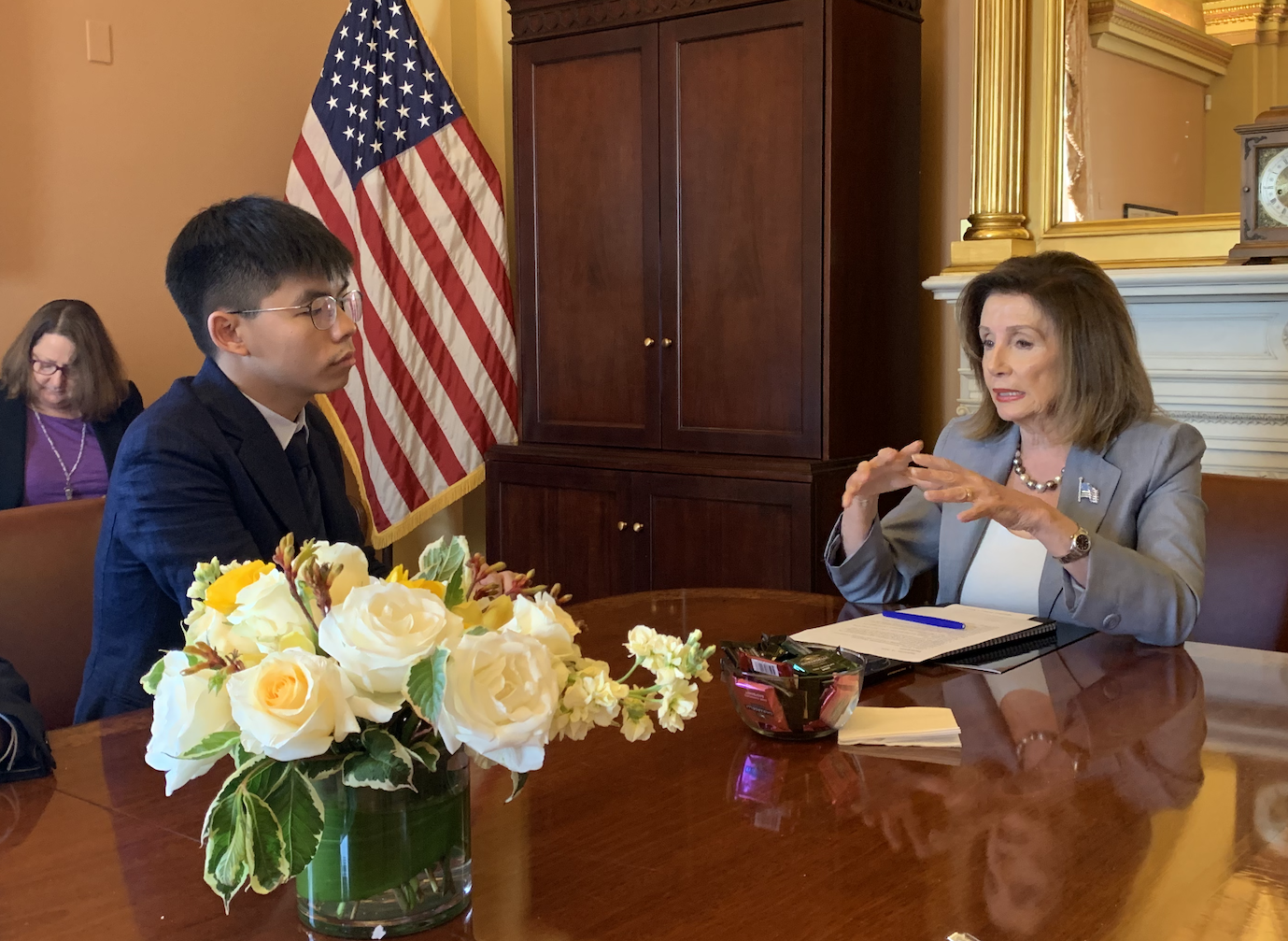
I have been looking through photographs from that visit. They capture something that gets lost in the headlines about Joshua's sentencing.
What were we actually doing?
Meeting elected representatives. Lobbying for legislation. Speaking publicly about human rights abuses. Asking other democracies to stand with Hong Kong.
None of this was secret. None of it was extraordinary. It was the ordinary work of political advocacy, the kind that happens every day in Washington and in democracies around the world.
Yet this is precisely the kind of work Beijing and Hong Kong authorities have sought to criminalize under the National Security Law.
Joshua was supposed to be released in January. Instead, he faces another decade in prison. He has already spent nearly six years behind bars and could remain imprisoned until he is 40.
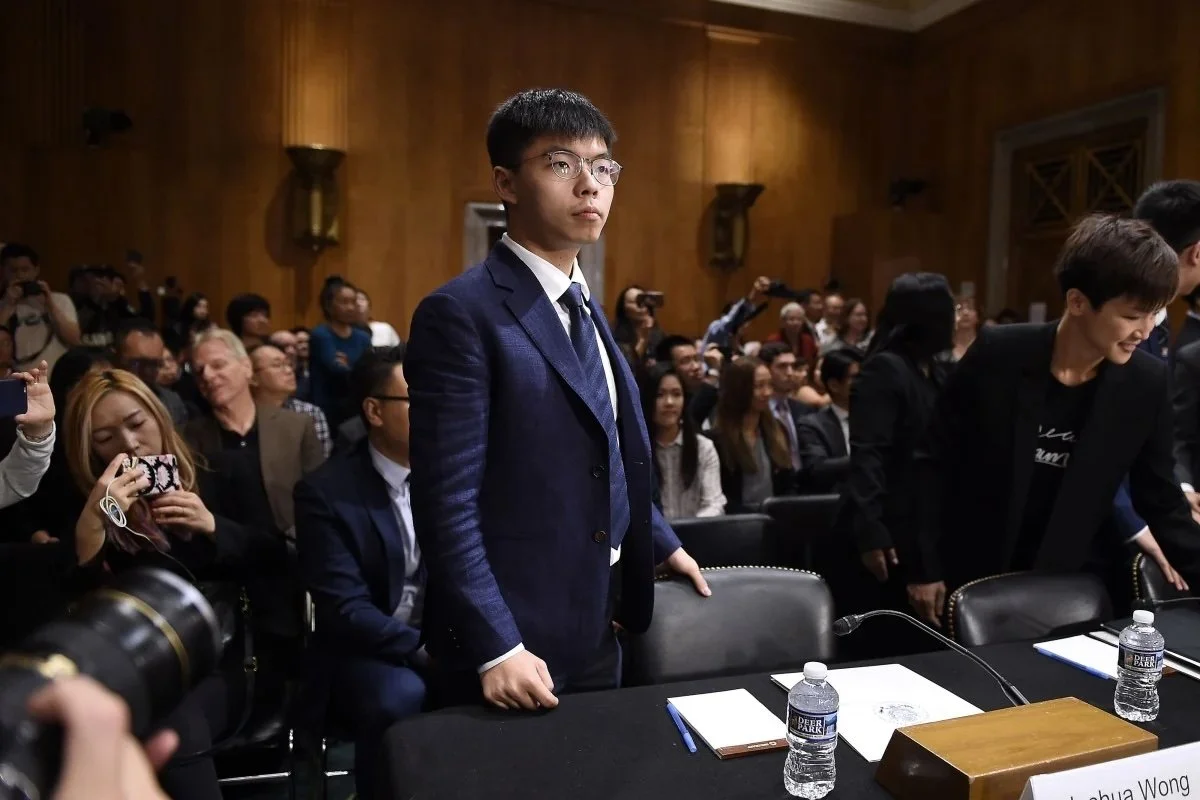
I returned home to Los Angeles after that visit. Joshua returned to Hong Kong.
Today, I can still organize, travel, speak, and advocate. Joshua cannot. The difference between us is not what we believed or the work we undertook, but where we happened to be when Beijing imposed the National Security Law.
I don't want Joshua remembered only as a political prisoner or another symbol of Hong Kong's lost freedoms. He was, and remains, an extraordinarily consequential political organizer. Beginning as a teenager, he helped bring a generation into political life, built international relationships, and demonstrated how ordinary people could organize to challenge institutions far more powerful than themselves.
The Hong Kong Human Rights and Democracy Act we advocated for in Washington became law in November 2019. That was not inevitable. It took years of organizing, relationships, persistence, and political pressure.
Those accomplishments matter. So does the fact that Joshua is now being punished for the kind of work that helped make them possible.
His sentence carries a larger warning. Beijing is not content simply to silence dissent inside Hong Kong. It wants to determine whom Hong Kongers can speak to, where they can organize, and whether they can ask the international community for help. It wants the rest of the world to accept that such advocacy threatens China's national security.
We should reject that premise outright.
We owe Joshua more than admiration for his courage. We owe him the continuation of the work.
That means continuing to demand his release and the release of Hong Kong's other political prisoners. It means refusing to allow Beijing to define legitimate international advocacy as criminal conduct. And it means ensuring that the relationships and institutions Joshua helped build continue to serve the people of Hong Kong.
Seven years ago, we walked the halls of Congress together to make Hong Kong's demands heard.
Joshua is now in prison. The work is not finished.
Samuel Chu